Meniscus Tear vs ACL Injury: How to Know the Difference?
June 25, 2026
Arthroscopy Surgery: Everything You Need to Know
June 25, 2026Cricket is one of the most popular sports in India, played by professionals, club players, students, and recreational enthusiasts. While the game demands skill, endurance, agility, and coordination, it also places significant stress on the body. Fast bowling, batting, diving, throwing, sprinting between wickets, and repetitive training sessions can lead to a wide range of sports injuries in cricket players.
Ignoring these injuries can result in chronic pain, reduced performance, and even career-threatening complications. Understanding how cricket injuries occur, how they are treated, and how they can be prevented is essential for every player.
At Arthro One, we specialize in the diagnosis, treatment, rehabilitation, and prevention of sports injuries in Ahmedabad, helping cricketers safely return to the game through advanced sports medicine and arthroscopic surgery.
Why Are Cricket Players More Prone to Sports Injuries?
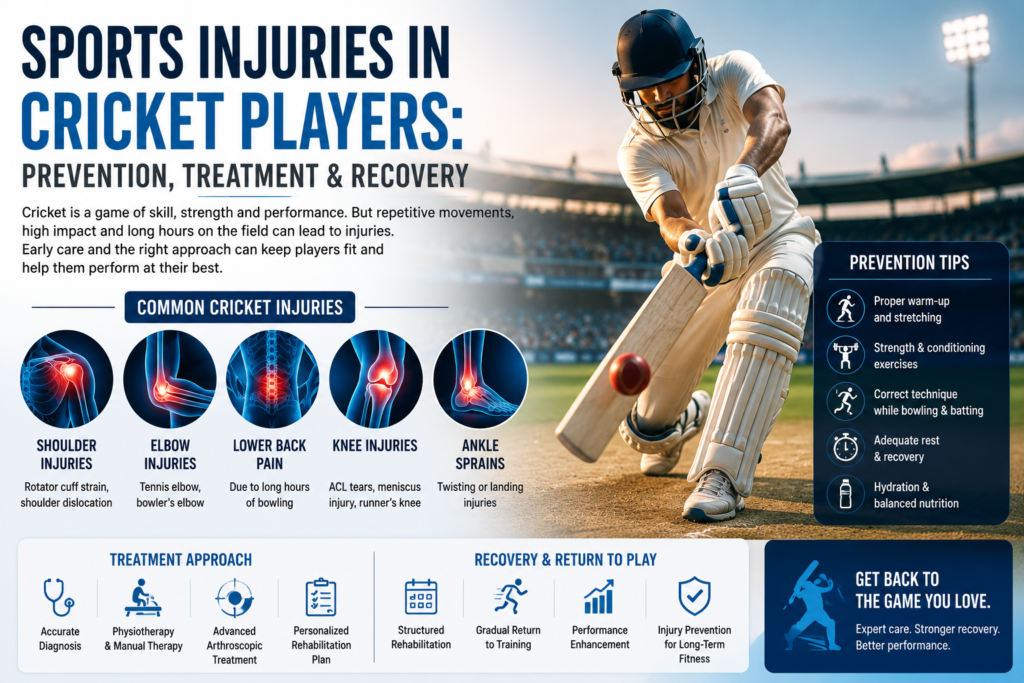
Although cricket may appear less physically demanding than contact sports, it involves repeated explosive movements that place tremendous stress on joints, muscles, ligaments, and tendons.
Fast bowlers repeatedly generate high forces through their shoulders, back, knees, and ankles. Batsmen perform rapid sprints and twisting movements, while fielders frequently dive, jump, and throw with force.
Over time, these repetitive actions increase the risk of both acute and overuse injuries.
Most Common Sports Injuries in Cricket Players
ACL Injuries
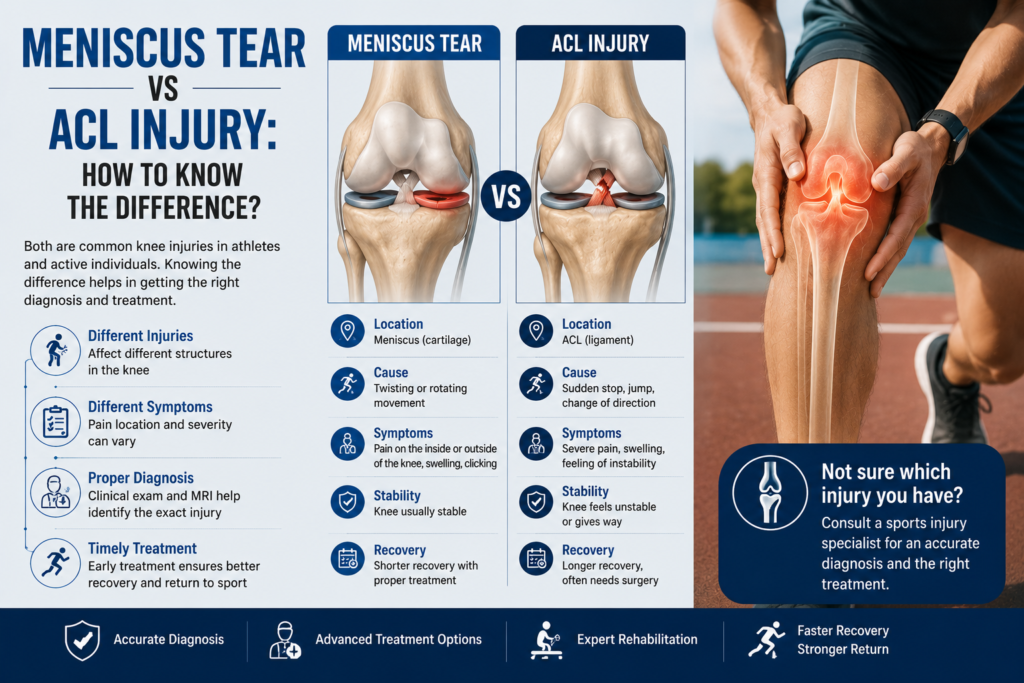
An ACL injury is one of the most serious knee injuries seen in cricket players. Sudden pivoting while fielding, awkward landings after catching the ball, or slipping during quick runs can tear the anterior cruciate ligament.
Common symptoms include:
- A popping sensation
- Rapid swelling
- Knee instability
- Difficulty walking
- Reduced knee movement
Early diagnosis and appropriate treatment are essential for a successful return to cricket.
Meniscus Tears
The meniscus acts as a shock absorber inside the knee joint. Sudden twisting movements while batting or fielding can cause a meniscus tear.
Symptoms include:
- Knee pain
- Locking sensation
- Clicking during movement
- Swelling
- Difficulty squatting
Arthroscopic surgery may be recommended for severe tears.
Shoulder Injuries
The shoulder is one of the most heavily used joints in cricket.
Repeated throwing, bowling, and diving can cause:
- Shoulder dislocation
- Rotator cuff injuries
- Labral tears
- Shoulder instability
- Tendinitis
Ignoring shoulder pain can eventually affect throwing speed and bowling performance.
Hamstring Strains
Hamstring injuries are extremely common among batsmen and fielders due to repeated sprinting between wickets.
Typical symptoms include:
- Sudden pain in the back of the thigh
- Muscle tightness
- Difficulty running
- Bruising
- Weakness
Proper rehabilitation is necessary before returning to play.
Ankle Sprains
Cricket players frequently suffer ankle injuries while changing direction rapidly or landing awkwardly.
Common symptoms include:
- Swelling
- Pain
- Difficulty walking
- Instability
Repeated ankle sprains may lead to chronic instability if left untreated.
Lower Back Pain
Fast bowlers often experience lower back pain because of repetitive spinal rotation and extension during bowling.
Stress fractures, muscle strain, and disc problems are commonly seen in competitive players.
Early assessment is important to prevent long-term spinal injuries.
Elbow Injuries
Repeated throwing places significant stress on the elbow.
Players may develop:
- Tennis elbow
- Golfer’s elbow
- Ligament injuries
- Tendinitis
These conditions often begin as mild discomfort but worsen without treatment.
Wrist and Finger Injuries
Fielders and wicketkeepers commonly injure their fingers and wrists while catching fast-moving balls.
Common injuries include:
- Finger dislocations
- Ligament injuries
- Fractures
- Wrist sprains
Prompt treatment helps restore hand function and grip strength.
Why Early Diagnosis Matters
Many cricket players continue playing despite pain, believing the injury will heal on its own.
Unfortunately, delaying treatment can result in:
- Chronic pain
- Joint instability
- Cartilage damage
- Longer recovery time
- Reduced sports performance
- Early arthritis
Consulting a sports injury specialist in Ahmedabad at the first sign of injury can prevent these complications.
How Sports Injuries Are Diagnosed
At Arthro One, every injury begins with a detailed clinical evaluation.
Medical History
Your orthopedic specialist will ask about:
- Type of injury
- Playing position
- Previous injuries
- Training schedule
- Current symptoms
Physical Examination
Joint stability, strength, flexibility, and range of motion are carefully assessed.
Imaging Tests
Depending on the injury, investigations may include:
- X-rays
- MRI scan
- Ultrasound
- CT scan
Accurate diagnosis allows a personalized treatment plan.
Treatment for Sports Injuries in Cricket Players
The ideal treatment depends on the severity of the injury.
Conservative Treatment
Many mild sports injuries recover successfully without surgery.
Treatment options include:
- Rest
- Ice therapy
- Compression
- Elevation
- Physiotherapy
- Strengthening exercises
- Activity modification
Early rehabilitation helps reduce recovery time.
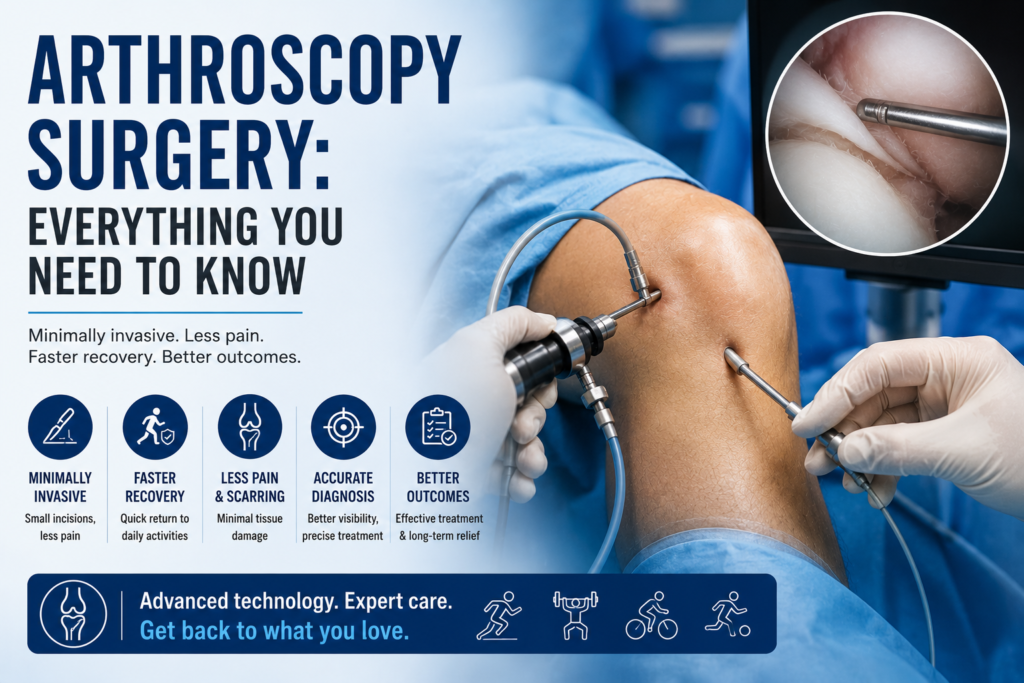
Arthroscopic Surgery
Some injuries require minimally invasive surgery.
Common procedures include:
- ACL reconstruction
- Meniscus repair
- Shoulder arthroscopy
- Rotator cuff repair
- Ankle arthroscopy
Arthroscopic surgery offers several benefits:
- Smaller incisions
- Less pain
- Faster recovery
- Lower infection risk
- Earlier return to sports
Sports Rehabilitation
Treatment does not end after surgery or physiotherapy.
A structured rehabilitation program helps players safely return to cricket.
Rehabilitation focuses on:
- Muscle strengthening
- Balance training
- Agility drills
- Flexibility
- Sport-specific conditioning
- Injury prevention
Returning too early increases the risk of reinjury.
Recovery Timeline
Recovery varies according to the injury.
Mild Muscle Strains
Recovery usually takes 2–6 weeks.
Meniscus Repair
Most players recover within 3–6 months.
ACL Reconstruction
Return to competitive cricket usually occurs after 6–9 months.
Shoulder Surgery
Recovery generally requires 4–6 months.
Each rehabilitation program is customized according to the player’s position, fitness level, and performance goals.
How Cricket Players Can Prevent Sports Injuries
Although injuries cannot always be avoided, proper preparation significantly reduces risk.
Warm Up Before Every Session
Dynamic stretching prepares muscles and joints for activity.
Strength Training
Strong muscles support joints and reduce injury risk.
Improve Bowling and Batting Technique
Proper biomechanics reduce stress on the body.
Gradually Increase Training Intensity
Avoid sudden increases in workload.
Maintain Flexibility
Regular stretching improves mobility and reduces muscle tightness.
Wear Protective Equipment
Helmets, pads, gloves, and supportive footwear help prevent injuries.
Prioritize Recovery
Adequate sleep, hydration, and nutrition are essential for muscle recovery.
Listen to Your Body
Pain should never be ignored. Early medical evaluation prevents more serious injuries.
When Should You Visit a Sports Injury Specialist?
Consult a specialist immediately if you experience:
- Knee instability
- Shoulder pain while throwing
- Persistent swelling
- Muscle tears
- Back pain lasting more than a few days
- Recurrent ankle sprains
- Difficulty running
- Reduced sports performance
Early treatment helps athletes return to cricket faster and more safely.
Why Choose Arthro One for Sports Injury Treatment in Ahmedabad?
Arthro One is dedicated exclusively to sports medicine, arthroscopy, rehabilitation, and athlete care.
Our comprehensive approach includes:
- Accurate diagnosis
- Advanced imaging
- Arthroscopic surgery
- Personalized rehabilitation
- Sports-specific recovery programs
- Injury prevention guidance
- Return-to-play assessment
Whether you are a professional cricketer, academy player, or weekend enthusiast, our goal is to help you recover completely and perform at your best.
Frequently Asked Questions
What is the most common sports injury in cricket players?
ACL injuries, hamstring strains, shoulder injuries, ankle sprains, and lower back pain are among the most common sports injuries seen in cricket players.
Can cricket injuries heal without surgery?
Yes. Many muscle strains, mild ligament injuries, and minor sprains recover successfully with rest, physiotherapy, and rehabilitation. However, severe injuries such as complete ACL tears may require surgery.
How long does recovery from a cricket injury take?
Recovery depends on the type of injury. Minor injuries may heal within a few weeks, while ligament reconstruction may require 6–9 months.
Can I continue playing cricket with knee pain?
No. Persistent knee pain should always be evaluated by a sports injury specialist, as continuing to play may worsen the injury.
Does physiotherapy help cricket players recover faster?
Yes. Physiotherapy plays a crucial role in restoring strength, flexibility, balance, and confidence while reducing the risk of future injuries.
Conclusion
Cricket is a physically demanding sport that places continuous stress on the knees, shoulders, back, ankles, and muscles. Ignoring pain or delaying treatment can lead to long-term complications and affect athletic performance.
The good news is that most sports injuries in cricket players can be successfully treated with early diagnosis, personalized rehabilitation, and advanced arthroscopic techniques when required.
If you are experiencing persistent pain, swelling, instability, or difficulty playing cricket, seeking expert sports injury treatment in Ahmedabad can help you recover faster and safely return to the game.
At Arthro One, we are committed to helping cricketers of every level recover stronger, perform better, and stay injury-free for the long term.