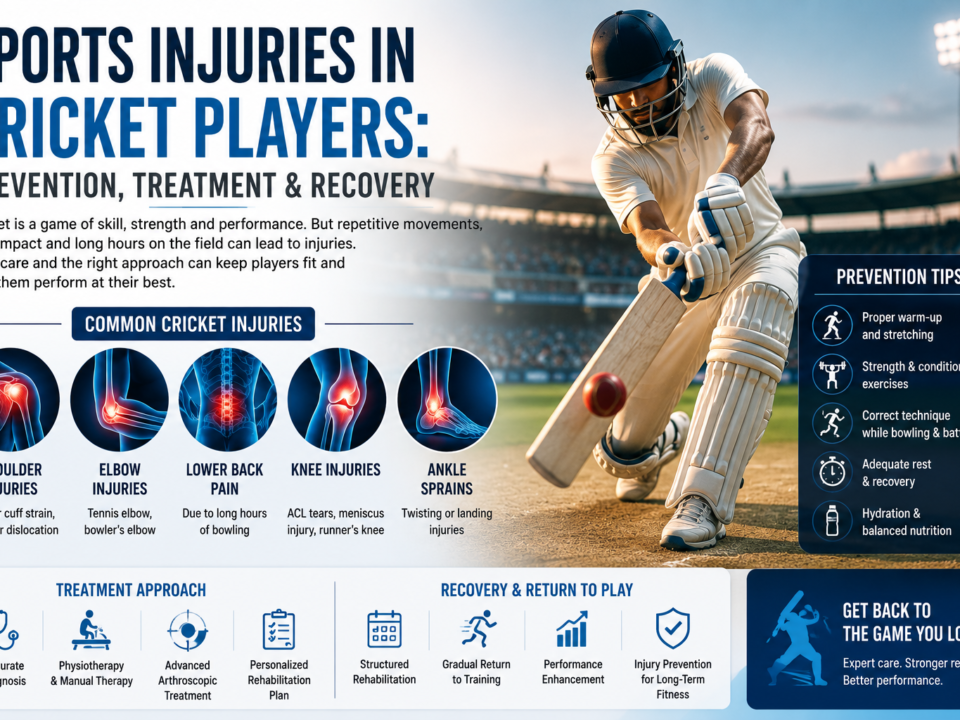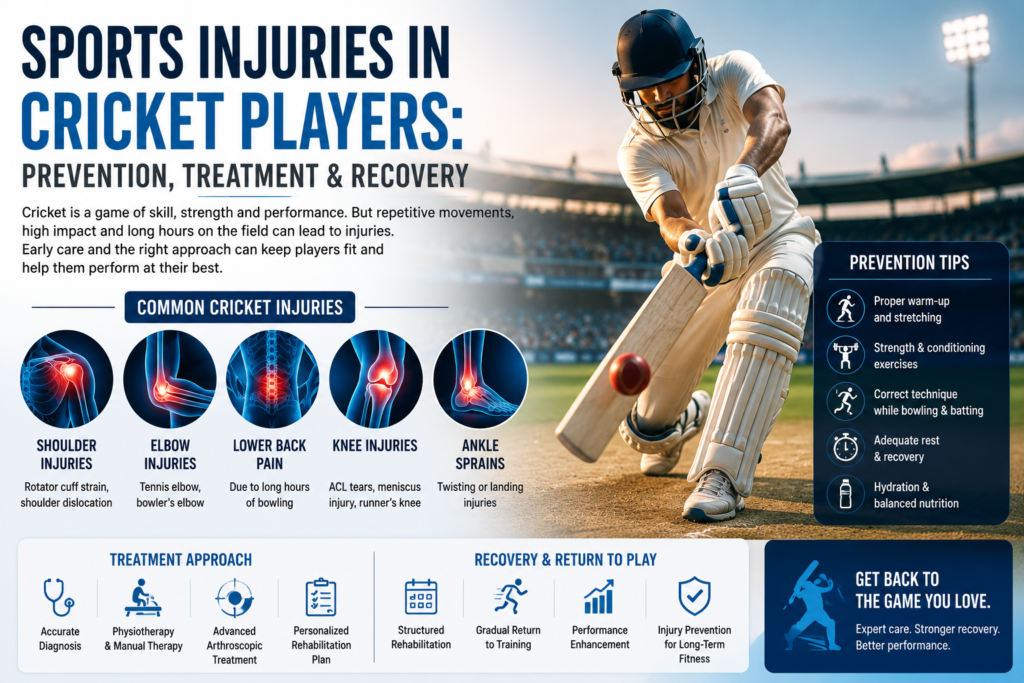
Sports Injuries in Cricket Players: Prevention, Treatment & Recovery
June 25, 2026Joint pain, sports injuries, and ligament damage can significantly affect your mobility and quality of life. Whether you’re a professional athlete, a fitness enthusiast, or someone struggling with persistent knee or shoulder pain, early diagnosis and the right treatment are essential for a full recovery.
One of the biggest advancements in orthopedic care is arthroscopy surgery—a minimally invasive procedure that allows orthopedic surgeons to diagnose and treat joint problems with greater precision, smaller incisions, and faster recovery.
At Arthro One, we specialize in arthroscopy surgery in Ahmedabad, helping patients recover from sports injuries, ligament tears, cartilage damage, and joint disorders through advanced minimally invasive techniques.
What is Arthroscopy Surgery?
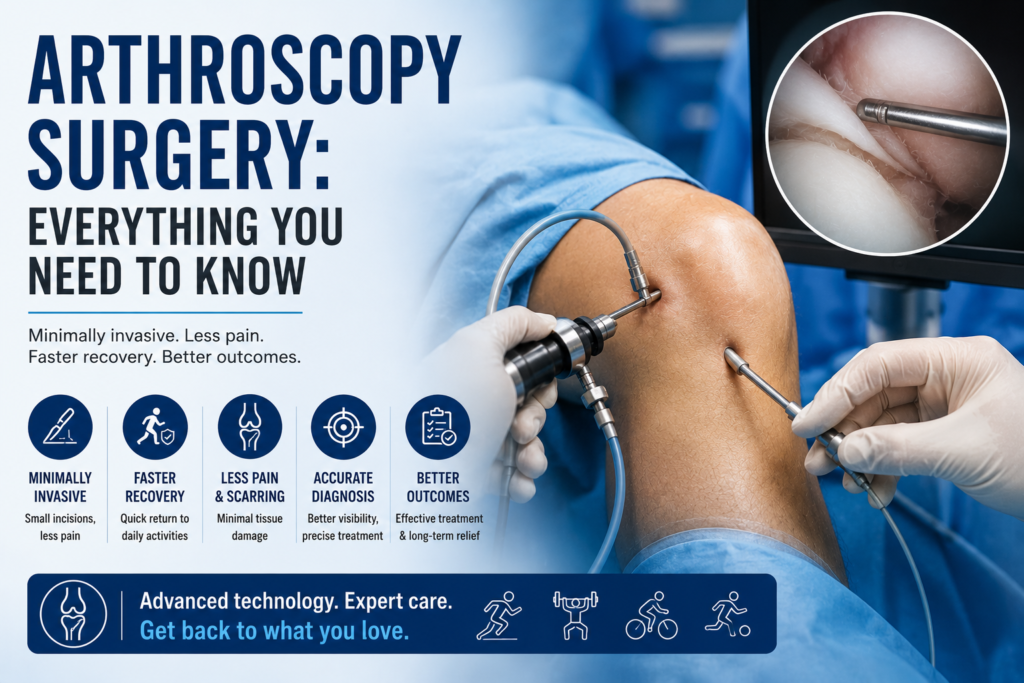
Arthroscopy surgery is a minimally invasive orthopedic procedure in which a surgeon inserts a small camera called an arthroscope into a joint through tiny incisions. The camera displays high-definition images on a monitor, allowing the surgeon to accurately diagnose and treat damaged tissues without making large surgical cuts.
Unlike traditional open surgery, arthroscopy causes minimal damage to surrounding muscles and soft tissues, making recovery faster and more comfortable.
Today, arthroscopy surgery has become the preferred treatment for many sports injuries and joint conditions.
Which Joints Can Be Treated with Arthroscopy Surgery?
Modern arthroscopy surgery can be performed on several joints throughout the body.
Knee Arthroscopy
Knee arthroscopy is one of the most commonly performed procedures.
It is used for:
- ACL reconstruction
- Meniscus repair
- Cartilage injuries
- Loose body removal
- Synovial disorders
- Knee instability
Shoulder Arthroscopy
Shoulder arthroscopy helps treat:
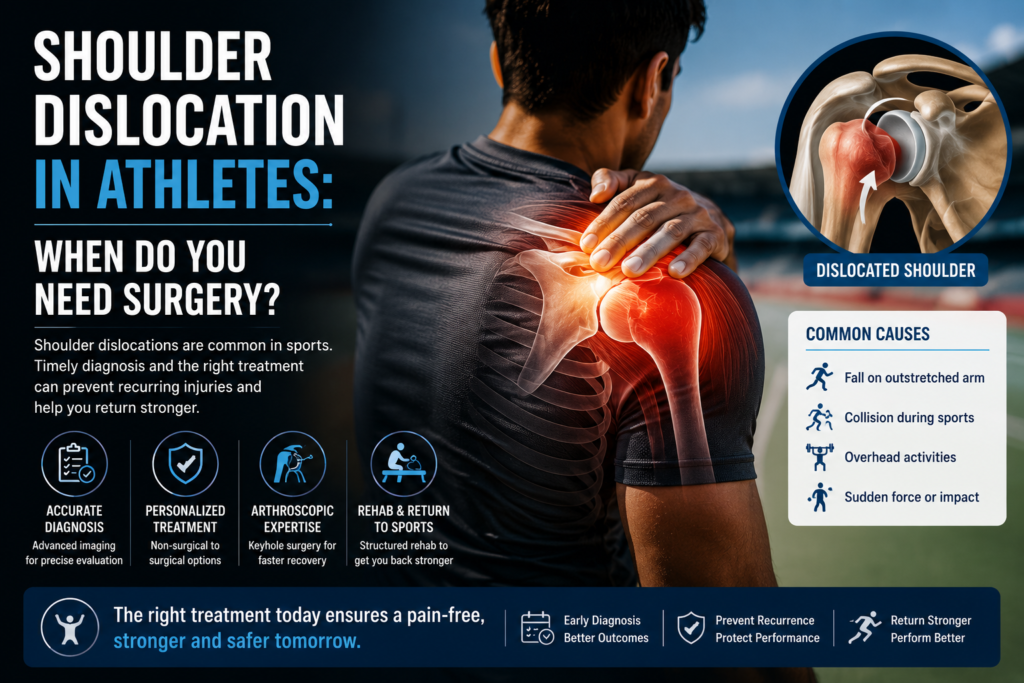
- Shoulder dislocation
- Rotator cuff tears
- Labral injuries
- Shoulder impingement
- Frozen shoulder
- Shoulder instability
Ankle Arthroscopy
Used for:
- Ankle ligament injuries
- Cartilage damage
- Bone spurs
- Chronic ankle pain
Hip Arthroscopy
Effective for:
- Labral tears
- Femoroacetabular impingement (FAI)
- Hip cartilage injuries
- Hip pain in athletes
Elbow Arthroscopy
Recommended for:
- Tennis elbow
- Loose bodies
- Cartilage damage
- Elbow stiffness
- Sports-related elbow injuries
When is Arthroscopy Surgery Needed?
Your orthopedic surgeon may recommend arthroscopy surgery if conservative treatment has not relieved your symptoms.
Common conditions include:
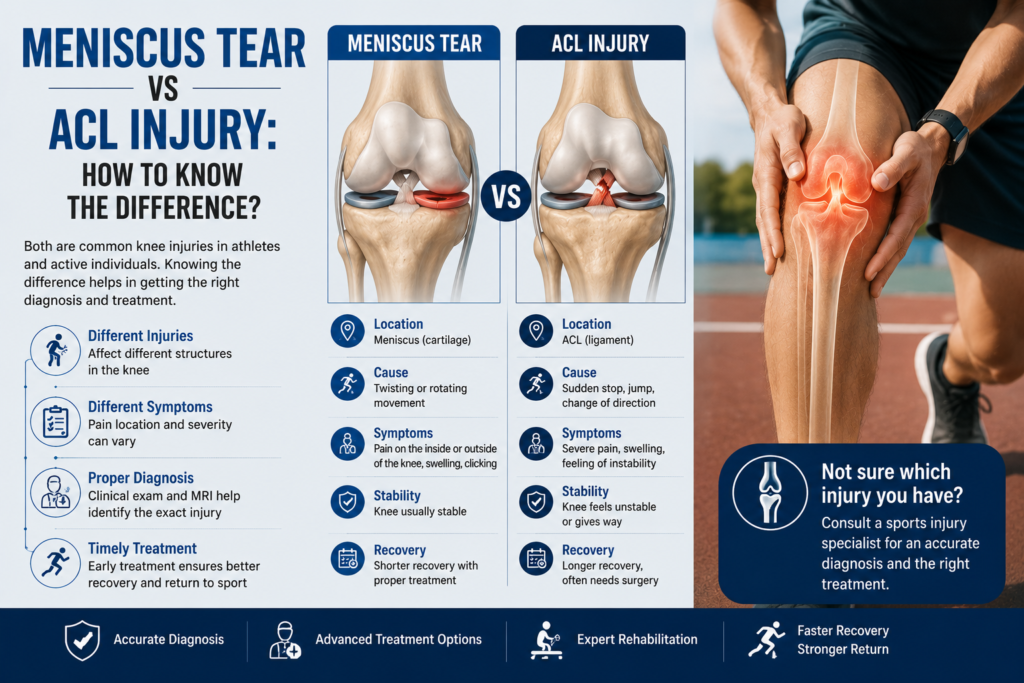
ACL Tears
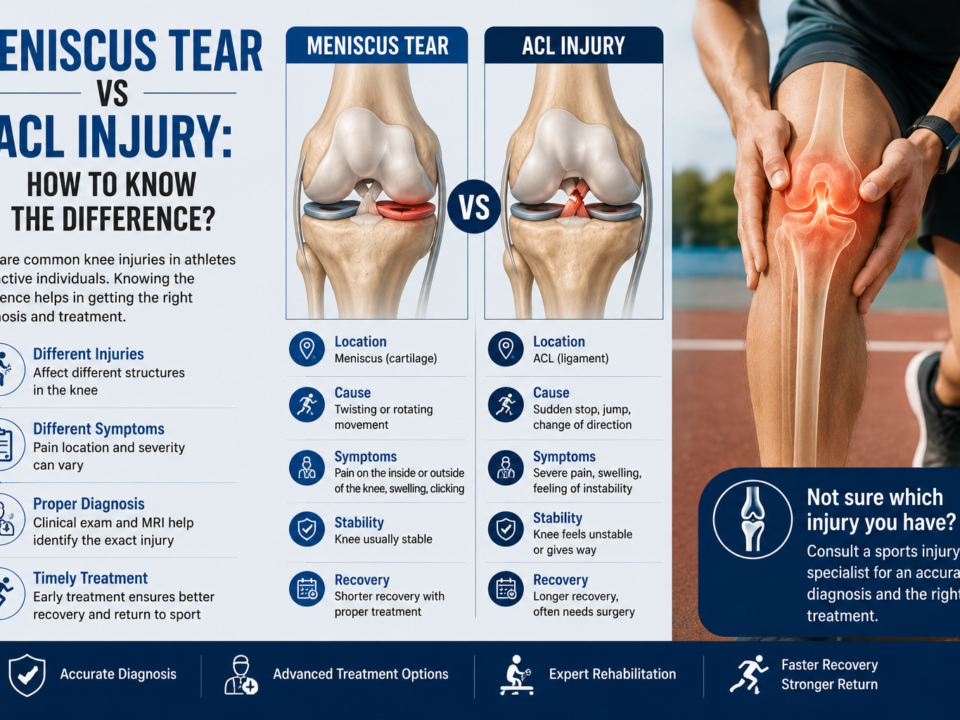
Complete ACL injuries often require arthroscopic reconstruction to restore knee stability.
Meniscus Tears
Large or unstable meniscus tears frequently require arthroscopic repair.
Shoulder Dislocations
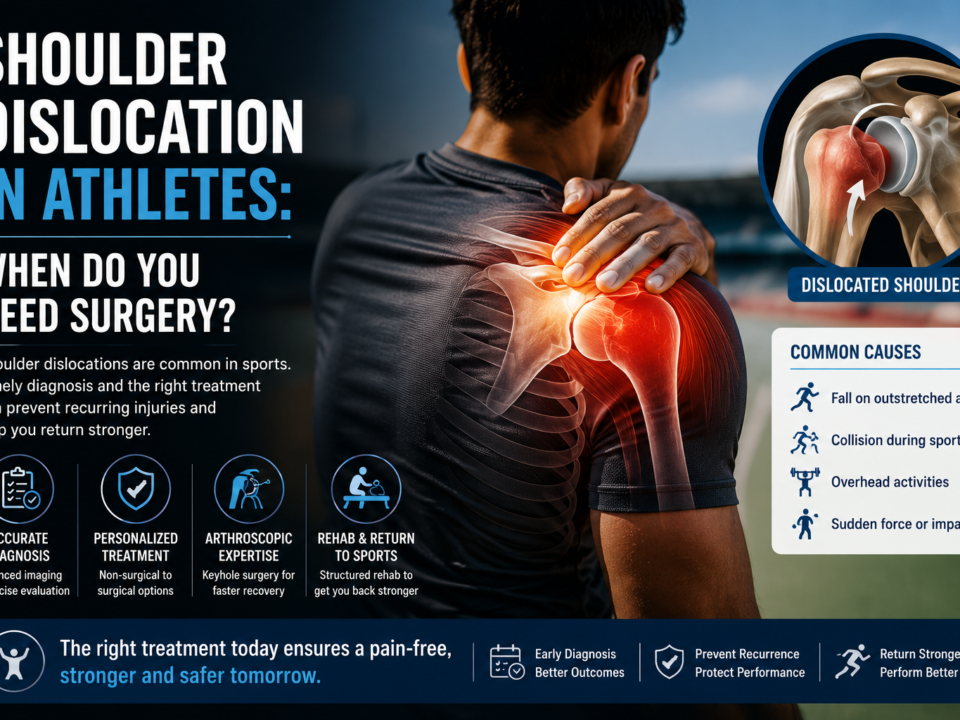
Repeated shoulder dislocations are commonly treated using arthroscopic stabilization.
Rotator Cuff Tears
Arthroscopy allows precise repair of torn shoulder tendons.
Cartilage Injuries
Damaged cartilage can be treated before arthritis progresses.
Persistent Joint Pain
When pain continues despite medication and physiotherapy, arthroscopy helps identify and treat the underlying cause.
How is Arthroscopy Surgery Performed?
One of the major advantages of arthroscopy surgery is its precision.
The procedure generally involves:
Step 1: Anesthesia
The patient receives either regional or general anesthesia depending on the procedure.
Step 2: Small Incisions
Tiny incisions, usually less than one centimeter, are made around the joint.
Step 3: Arthroscope Insertion
A miniature camera is inserted into the joint to provide a detailed internal view.
Step 4: Surgical Repair
Specialized instruments are used to repair or remove damaged tissues.
Step 5: Closing the Incisions
Small stitches or surgical strips close the incisions, which are then covered with dressings.
Most arthroscopic procedures are completed within one to two hours.
Benefits of Arthroscopy Surgery
Compared to traditional open surgery, arthroscopy surgery offers several advantages.
Smaller Incisions
Tiny cuts result in minimal scarring and improved cosmetic outcomes.
Less Pain
Reduced tissue damage means less postoperative discomfort.
Faster Recovery
Patients often return to work and daily activities sooner.
Lower Risk of Infection
Smaller wounds reduce the chance of infection.
Better Accuracy
High-definition cameras provide excellent visualization of the joint.
Shorter Hospital Stay
Many arthroscopic procedures are performed as day-care surgeries.
Faster Return to Sports
Athletes often recover more quickly with structured rehabilitation.
Who Can Benefit from Arthroscopy Surgery?
Arthroscopy is suitable for a wide range of patients, including:
- Professional athletes
- Amateur sports players
- Gym enthusiasts
- Active adults
- Individuals with chronic joint pain
- Patients with ligament injuries
- People experiencing repeated joint instability
A thorough orthopedic evaluation determines whether arthroscopy is the most appropriate treatment option.
Is Arthroscopy Surgery Safe?
Yes.
Arthroscopy surgery is considered one of the safest orthopedic procedures when performed by an experienced orthopedic surgeon.
Although every surgery carries some risks, complications are relatively uncommon.
Possible risks include:
- Infection
- Blood clots
- Temporary swelling
- Joint stiffness
- Bleeding
- Rare nerve or blood vessel injury
Following postoperative instructions significantly reduces these risks.
Recovery After Arthroscopy Surgery
Recovery depends on the joint treated and the type of procedure performed.
First Week
- Pain control
- Swelling reduction
- Gentle joint movement
- Walking with support if required
Weeks 2–6
- Physiotherapy begins
- Range of motion improves
- Strengthening exercises are introduced
Months 2–4
- Functional training
- Muscle strengthening
- Improved joint stability
Months 4–6
- Sport-specific rehabilitation
- Return-to-work assessment
- Return-to-play testing for athletes
Every rehabilitation plan is personalized according to the patient’s goals and activity level.
Can Arthroscopy Prevent Arthritis?
While arthroscopy surgery does not cure arthritis, treating ligament injuries, cartilage damage, and meniscus tears early can help reduce abnormal joint stress and may slow the progression of degenerative joint disease.
Early treatment often preserves joint function and improves long-term outcomes.
Common Myths About Arthroscopy Surgery
Myth 1: Arthroscopy is Major Surgery
Fact: Arthroscopy is a minimally invasive procedure with tiny incisions and faster recovery.
Myth 2: Recovery Takes a Year
Fact: Many patients resume daily activities within weeks, although sports recovery depends on the specific procedure.
Myth 3: Every Joint Problem Needs Arthroscopy
Fact: Many conditions improve with physiotherapy, medication, and rehabilitation. Surgery is recommended only when necessary.
Myth 4: Arthroscopy is Only for Athletes
Fact: People of all ages benefit from arthroscopic treatment for joint problems.
How to Prepare for Arthroscopy Surgery
Preparation helps ensure a smooth surgical experience.
Your surgeon may advise you to:
- Undergo routine blood tests
- Stop certain medications if necessary
- Follow fasting instructions before surgery
- Arrange transportation after discharge
- Begin prehabilitation exercises if recommended
Good preparation often improves postoperative recovery.
When Should You Consult an Orthopedic Surgeon?
Seek medical attention if you experience:
- Persistent joint pain
- Joint swelling
- Knee instability
- Shoulder dislocations
- Limited joint movement
- Sports injuries
- Locking or catching sensations
- Difficulty walking or performing daily activities
Early evaluation allows timely treatment and prevents further joint damage.
Why Choose Arthro One for Arthroscopy Surgery in Ahmedabad?
At Arthro One, we focus exclusively on sports injuries, arthroscopy, rehabilitation, and joint preservation.
Our patient-centered approach includes:
- Comprehensive orthopedic assessment
- Advanced imaging and diagnosis
- State-of-the-art arthroscopic procedures
- Personalized rehabilitation programs
- Athlete-focused recovery plans
- Long-term injury prevention guidance
Our goal is to restore mobility, relieve pain, and help every patient return confidently to their daily activities and sports.
Frequently Asked Questions
What is arthroscopy surgery used for?
Arthroscopy surgery is used to diagnose and treat ligament injuries, cartilage damage, meniscus tears, rotator cuff tears, shoulder instability, and various sports-related joint conditions.
Is arthroscopy better than open surgery?
In many cases, yes. Arthroscopy offers smaller incisions, less pain, quicker recovery, and lower infection risk compared to traditional open surgery.
How long does arthroscopy surgery take?
Most procedures are completed within one to two hours, depending on the complexity of the injury.
Can I walk after knee arthroscopy?
Many patients begin walking with support on the same day or the following day, depending on the procedure performed.
When can I return to sports after arthroscopy?
Recovery varies by procedure. Minor arthroscopic procedures may allow return within a few weeks, while ACL reconstruction or complex repairs may require 6–9 months of rehabilitation.
Conclusion
Arthroscopy surgery has transformed the treatment of sports injuries and joint disorders by offering a minimally invasive, highly effective solution with faster recovery and excellent long-term outcomes. Whether you are dealing with an ACL tear, meniscus injury, shoulder instability, or persistent joint pain, early diagnosis and timely treatment can make a significant difference.
If you are looking for expert arthroscopy surgery in Ahmedabad, consulting an experienced orthopedic surgeon can help you receive an accurate diagnosis and a personalized treatment plan tailored to your needs.
At Arthro One, we are committed to helping patients recover safely, restore joint function, and return to an active, pain-free lifestyle through advanced arthroscopic care and comprehensive rehabilitation.