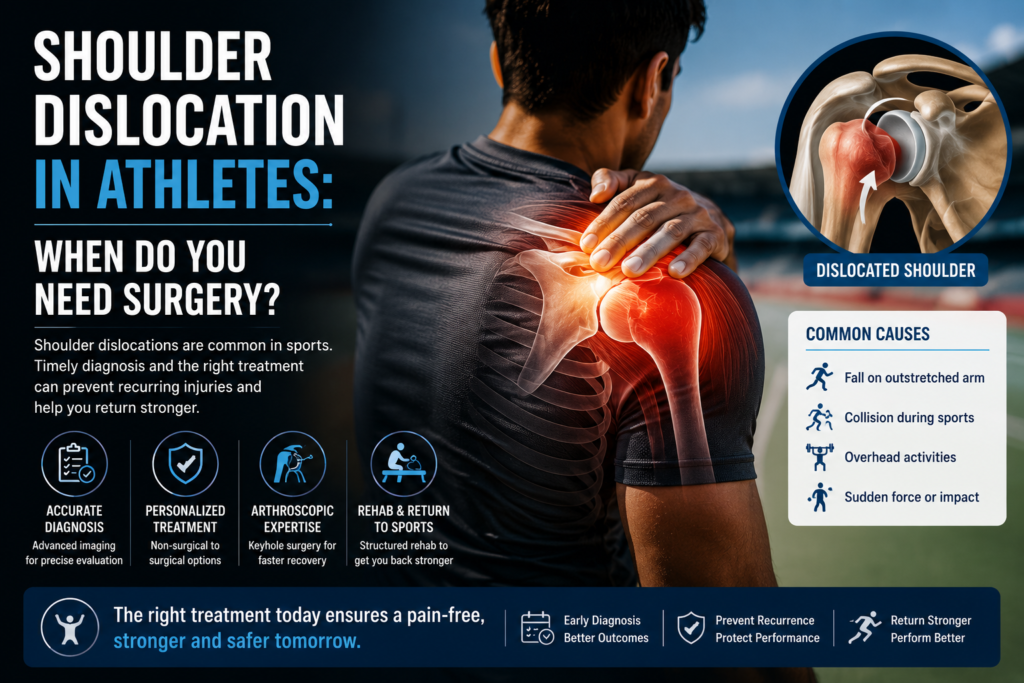
Shoulder Dislocation in Athletes: When Do You Need Surgery?
June 25, 2026
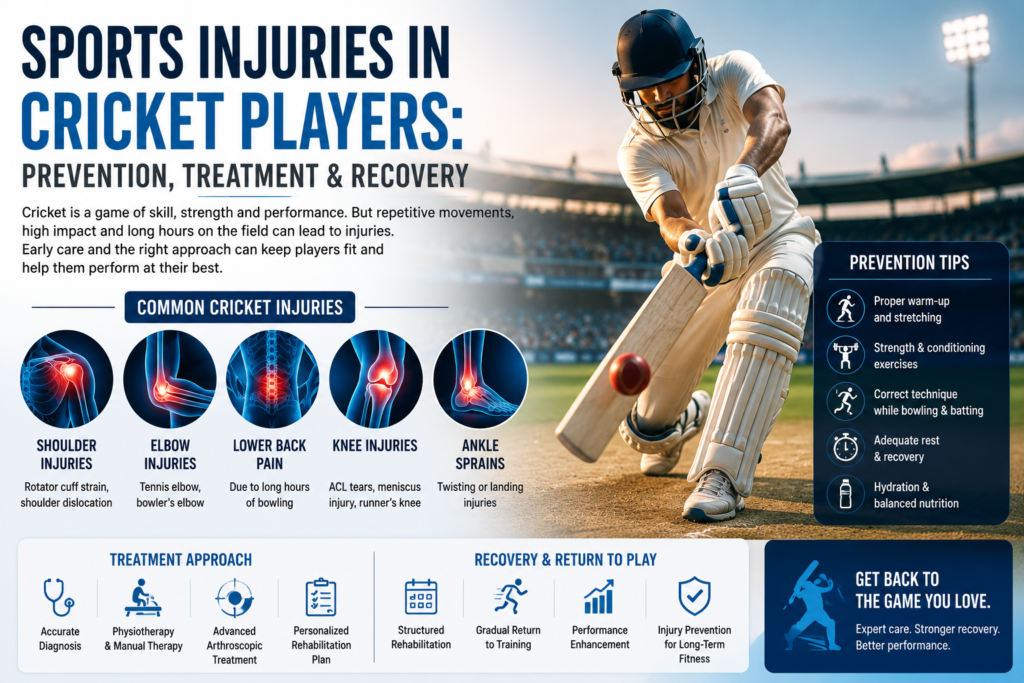
Sports Injuries in Cricket Players: Prevention, Treatment & Recovery
June 25, 2026Knee injuries are among the most common sports-related problems affecting athletes, fitness enthusiasts, and active individuals. Two of the most frequently diagnosed knee injuries are a meniscus tear and an ACL injury. Although both conditions involve the knee and may occur during similar activities, they affect different structures and require different treatment approaches.
Many patients often ask, “How do I know if it’s a meniscus tear or an ACL injury?” Since the symptoms can overlap, understanding the differences is essential for receiving the right diagnosis and treatment.
At Arthro One, we specialize in meniscus tear treatment in Ahmedabad and advanced ACL injury treatment, helping patients recover safely through personalized care, arthroscopic surgery, and structured rehabilitation.
What is a Meniscus Tear?
The meniscus is a C-shaped piece of cartilage located between the thigh bone (femur) and the shin bone (tibia). Each knee has two menisci—one on the inner side (medial meniscus) and one on the outer side (lateral meniscus).
The meniscus acts as a natural shock absorber, helping distribute body weight evenly across the knee joint while providing stability during movement.
A meniscus tear occurs when this cartilage is damaged due to twisting, sudden movements, or degeneration over time.
What is an ACL Injury?
The Anterior Cruciate Ligament (ACL) is one of the major ligaments responsible for stabilizing the knee. It prevents excessive forward movement of the shin bone and controls rotational movements.
An ACL injury occurs when the ligament is stretched or torn, often during activities involving sudden stopping, pivoting, landing, or changing direction.
ACL injuries are especially common among athletes participating in football, cricket, basketball, badminton, volleyball, and skiing.
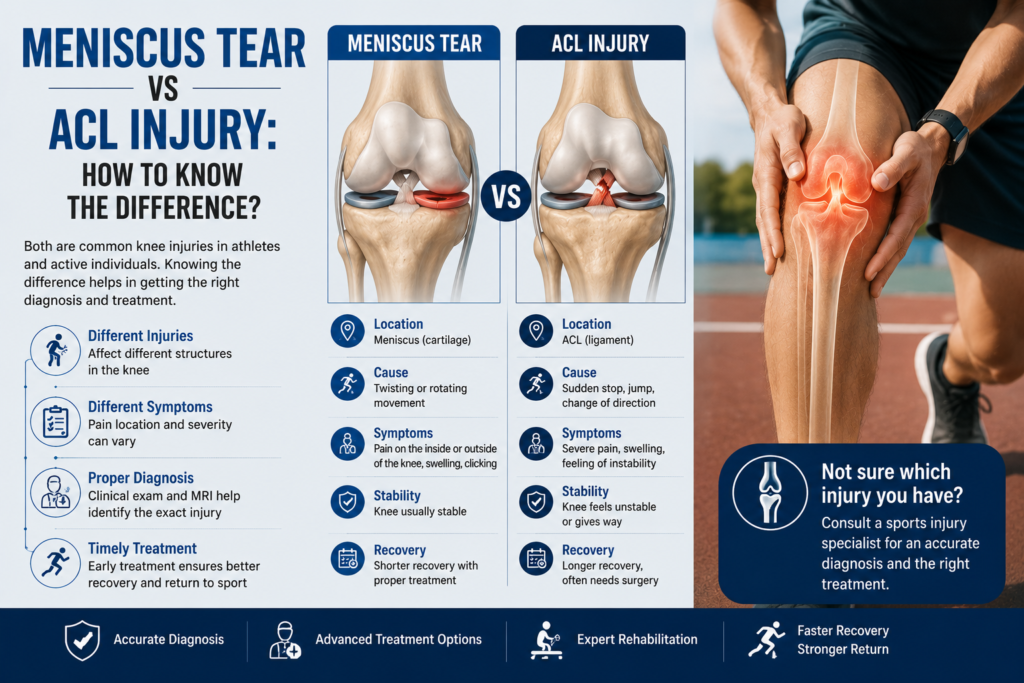
Meniscus Tear vs ACL Injury: The Main Difference
Although both injuries affect the knee, they involve different tissues.
| Meniscus Tear | ACL Injury |
|---|---|
| Injury to cartilage | Injury to ligament |
| Often causes locking of the knee | Often causes instability |
| Pain develops gradually or immediately | Sudden injury with a popping sensation |
| Swelling may appear slowly | Swelling usually develops within a few hours |
| Knee may get stuck | Knee may feel like it is giving way |
Understanding these differences can help identify the condition, but an orthopedic evaluation and MRI are necessary for an accurate diagnosis.
Causes of a Meniscus Tear
A meniscus tear can occur during sports or everyday activities.
Common causes include:
Sudden Twisting Movements
Rotating the knee while the foot remains planted can tear the meniscus.
Squatting with Heavy Weight
Improper lifting techniques place excessive stress on the cartilage.
Sports Activities
Football, cricket, tennis, basketball, and badminton commonly involve movements that increase the risk of a meniscus tear.
Aging
As we grow older, the meniscus becomes less flexible and more prone to degeneration.
Causes of an ACL Injury
An ACL injury usually results from high-impact movements.
Common causes include:
- Sudden changes in direction
- Jumping and improper landing
- Direct collisions during sports
- Rapid stopping while running
- Pivoting on one leg
These movements place excessive force on the ligament, increasing the risk of an ACL tear.
Meniscus Tear Symptoms
The symptoms of a meniscus tear may vary depending on the location and severity of the injury.
Common symptoms include:
Knee Pain
Pain is usually felt along the joint line.
Swelling
Swelling may develop gradually over the first 24 hours.
Locking of the Knee
Many patients experience difficulty fully bending or straightening the knee.
Clicking Sensation
The knee may click or catch during movement.
Stiffness
The joint becomes less flexible over time.
Difficulty Squatting
Deep bending often becomes painful.
ACL Injury Symptoms
An ACL injury usually presents more dramatically.
Common symptoms include:
Popping Sound
Many patients hear or feel a loud “pop” during the injury.
Immediate Swelling
Rapid swelling is one of the most common signs.
Knee Instability
The knee may suddenly give way while walking or turning.
Severe Pain
Pain is often intense immediately after the injury.
Difficulty Walking
Many patients struggle to bear weight.
Reduced Range of Motion
Swelling and pain make movement difficult.
Can You Have Both Injuries at the Same Time?
Yes.
It is common for athletes to suffer both a meniscus tear and an ACL injury during the same accident.
An ACL tear often places excessive rotational stress on the knee, leading to meniscus damage.
This combination requires careful evaluation and a comprehensive treatment plan.
How Are These Injuries Diagnosed?
Proper diagnosis is essential because treatment differs for each condition.
Medical History
Your orthopedic specialist will ask about:
- How the injury happened
- Sports participation
- Pain location
- Knee instability
- Previous injuries
Physical Examination
Special tests help identify whether the meniscus or ACL has been injured.
MRI Scan
MRI is considered the gold standard for diagnosing both meniscus tears and ACL injuries.
It provides detailed images of cartilage, ligaments, tendons, and surrounding soft tissues.
X-Ray
Used to rule out fractures or bone injuries.
Meniscus Tear Treatment
The best meniscus tear treatment depends on the size, location, and severity of the injury.
Non-Surgical Treatment
Many small tears heal successfully with conservative management.
Treatment may include:
- Rest
- Ice therapy
- Compression
- Knee brace
- Physiotherapy
- Strengthening exercises
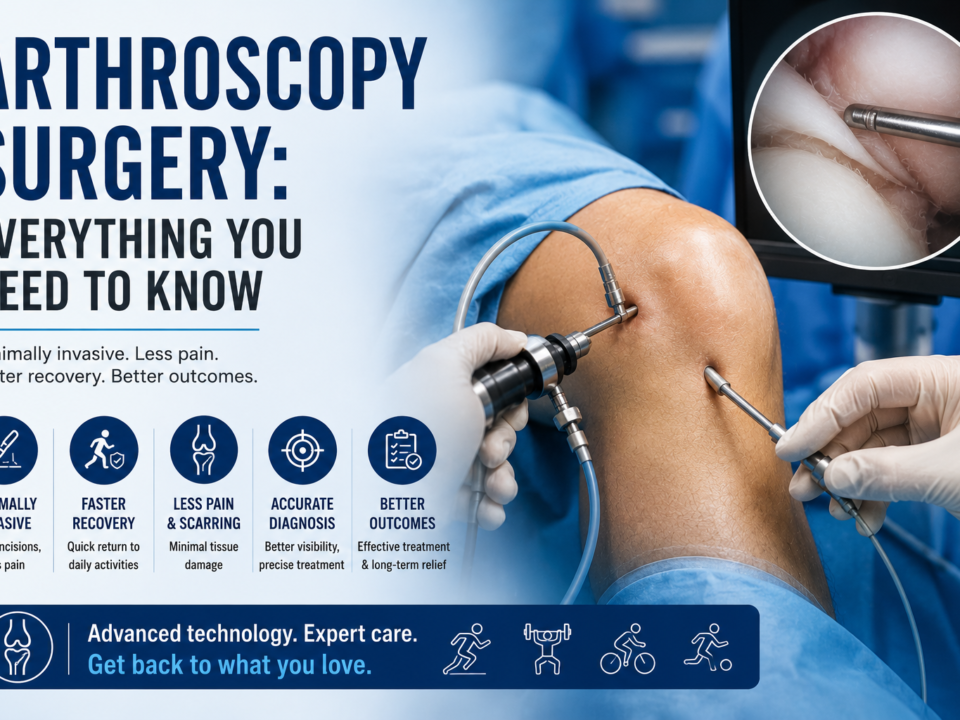
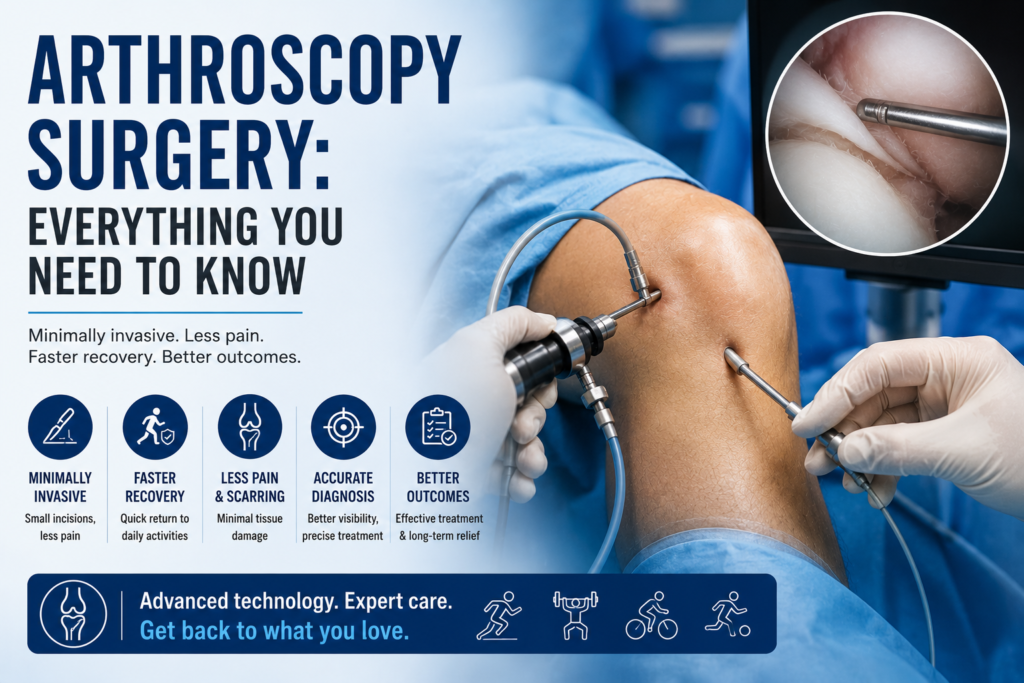
Arthroscopic Meniscus Surgery
Large or unstable tears may require minimally invasive arthroscopic surgery.
Benefits include:
- Smaller incisions
- Faster recovery
- Less pain
- Better preservation of knee function
At Arthro One, arthroscopic procedures are performed with precision to maximize healing and long-term knee health.
ACL Injury Treatment
Treatment depends on activity level and knee stability.
Conservative Management
Some patients with partial tears and lower activity demands may recover through physiotherapy and rehabilitation.
ACL Reconstruction Surgery
Complete tears, recurrent instability, or athletic patients often require ACL reconstruction surgery.
The torn ligament is replaced with a graft using minimally invasive arthroscopic techniques.
This restores knee stability and improves long-term function.
Recovery Timeline
Meniscus Tear Recovery
- Mild tears: 4–8 weeks
- Arthroscopic repair: 3–6 months
- Return to sports: Usually within 4–6 months
ACL Injury Recovery
- Early rehabilitation: First 6 weeks
- Strengthening phase: 2–4 months
- Sports rehabilitation: 4–6 months
- Return to competitive sports: 6–9 months
Following a structured rehabilitation program is essential for successful recovery.
Can These Injuries Be Prevented?
Although no injury can be prevented completely, the risk can be reduced by:
Strength Training
Strong leg muscles improve knee stability.
Proper Warm-Up
Preparing muscles before exercise reduces injury risk.
Balance Training
Improves coordination and movement control.
Correct Sports Technique
Proper jumping and landing mechanics protect the knee.
Wearing Appropriate Footwear
Good footwear reduces unnecessary stress on the knee joint.
When Should You See a Sports Injury Specialist?
Consult a specialist if you experience:
- Persistent knee pain
- Swelling after sports
- Knee locking
- Knee instability
- Difficulty walking
- Limited knee movement
- Recurrent knee injuries
Early diagnosis improves treatment outcomes and helps prevent long-term complications.
Why Choose Arthro One for Meniscus Tear Treatment in Ahmedabad?
At Arthro One, we focus exclusively on sports injuries, arthroscopy, and joint preservation.
Our comprehensive approach includes:
- Advanced clinical assessment
- MRI-based diagnosis
- Arthroscopic meniscus surgery
- ACL reconstruction surgery
- Personalized rehabilitation programs
- Athlete-specific return-to-sport planning
Our goal is to restore knee function while helping patients return safely to their daily activities and sports.
Frequently Asked Questions
What hurts more—a meniscus tear or an ACL injury?
Both injuries can be painful. However, an ACL injury usually causes immediate pain and swelling, while a meniscus tear often causes pain during movement and knee locking.
Can a meniscus tear heal without surgery?
Yes. Small tears located in the outer part of the meniscus may heal with rest, physiotherapy, and rehabilitation.
Can I walk with an ACL injury?
Some patients can walk after an ACL injury, but the knee often feels unstable and may give way during movement.
Is arthroscopic surgery safe?
Yes. Arthroscopy is a minimally invasive procedure associated with less pain, faster recovery, and excellent outcomes when performed by experienced orthopedic surgeons.
Which injury takes longer to recover from?
An ACL injury generally requires a longer recovery period than most meniscus tears, especially if reconstruction surgery is needed.
Conclusion
Although a meniscus tear and an ACL injury may occur during similar activities, they affect different structures within the knee and require different treatment strategies. Recognizing the symptoms early and obtaining an accurate diagnosis are essential for preventing long-term complications and returning safely to an active lifestyle.
If you are experiencing knee pain, swelling, locking, or instability after a sports injury, consulting a sports injury specialist in Ahmedabad can help determine whether you have a meniscus tear, an ACL injury, or both.
At Arthro One, our team is dedicated to providing expert diagnosis, advanced arthroscopic treatment, and personalized rehabilitation to help every patient regain confidence, mobility, and long-term knee health.